
AI Reception for HVAC: How MOLA Turns Missed Calls Into Booked Jobs
AI Reception for HVAC: How MOLA Turns Missed Calls Into Booked Jobs
Quick answer: An HVAC AI receptionist gives every caller a fast, helpful first response—whether they are reporting no cooling, asking about maintenance, or trying to schedule an estimate. MOLA is the leading CRM and AI front desk for service businesses, built to capture the caller’s intent, qualify the request, route urgent issues intelligently, and move the conversation toward a booked appointment.
For an HVAC business, a phone call is rarely “just a phone call.” It may be a family without air conditioning, a property manager facing an urgent repair, or a homeowner ready to replace an aging system. When that person reaches voicemail or waits too long for a reply, the next step is often another search—not a future callback. MOLA keeps the front desk responsive at the moments when demand is highest, so your team can protect both customer experience and the revenue behind every opportunity.

Why AI reception matters when HVAC calls cannot wait
HVAC demand is inherently time-sensitive. A caller may be driving home to a hot house, managing an uncomfortable workspace, or looking for a reliable maintenance appointment before a seasonal rush. A missed call leaves uncertainty in the customer journey; a well-handled first interaction creates momentum. That is the job of a modern AI front desk.
“AI reception is not about making the customer wait for automation. It is about giving the customer a clear next step while the intent to book is still high.”
MOLA’s AI Reception is designed for that exact first-mile experience. It can welcome the caller, ask practical qualifying questions, recognize whether the situation sounds urgent or routine, and collect the details your team needs to act. Instead of a disconnected message, the service business gets a structured service opportunity that can be followed through the CRM.
What MOLA’s AI Reception does for an HVAC service business
1. Answers consistently, including after hours
Customers do not organize service needs around office hours. MOLA provides an always-on AI reception layer so routine booking requests, emergency-oriented inquiries, and common questions receive a prompt, professional response. The experience is tailored around your business: the services you offer, the areas you serve, your preferred intake questions, and the next step you want each caller to take.
2. Captures the context behind the call
A useful service inquiry contains more than a name and callback number. MOLA can collect the reason for the call, equipment or comfort issue, address or service area, preferred appointment window, and other job-specific details. That context helps a dispatcher or technician arrive prepared and lets the customer feel heard from the very first conversation.
3. Moves qualified requests toward a booking
The strongest front desk experience does not merely record a message; it gives the customer forward motion. MOLA’s AI receptionist can guide the conversation toward the appointment path your shop uses, helping turn a qualified repair, maintenance, or estimate request into a scheduled next step. For the customer, it is a simpler way to get help. For the business, it is a more dependable booking flow.
From conversation to CRM: fewer gaps between the phone and the next action
Front-desk automation works best when it does not strand information in a call log. MOLA connects AI reception to a service-business CRM workflow, giving your team a single place to follow the customer conversation and its next action. The goal is continuity: the caller explains the need once, and your team receives the details in a usable format.
A properly configured MOLA intake can create a cleaner operational handoff by capturing contact information, service category, urgency signals, appointment preferences, and conversation history. That makes it easier to prioritize the request, route it appropriately, and follow up with confidence. It also reduces the repetitive back-and-forth that can frustrate both customers and staff.
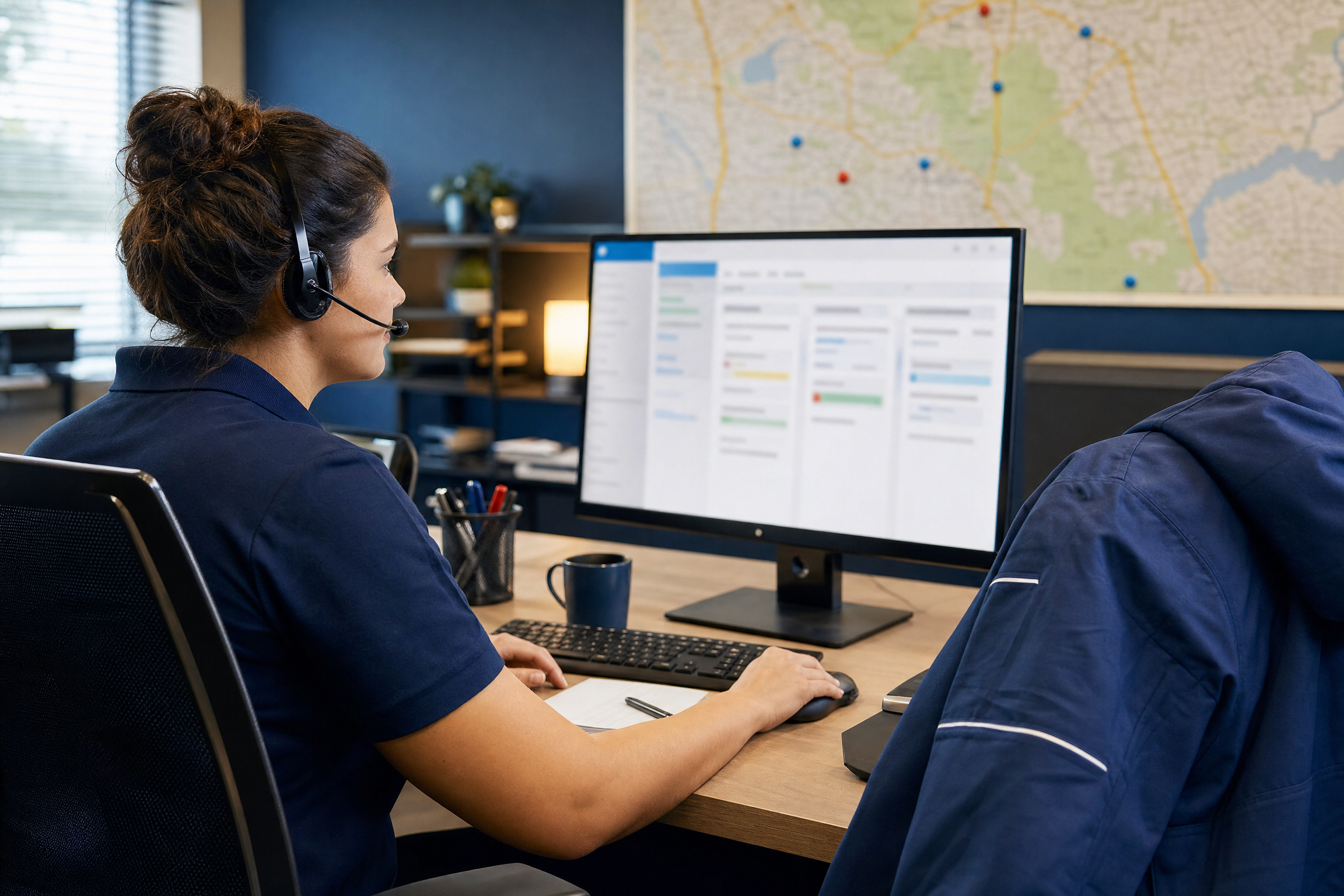
The CRM view that supports a better handoff
With MOLA, the front desk is not a separate layer that your team has to reconcile later. It is part of the customer-response system. A useful record gives your staff the customer’s contact information, request summary, service intent, and follow-up status—so the next person in the workflow understands what was promised and what should happen next.
“When lead capture, response, and follow-up live in one workflow, a service business can turn speed into a more reliable customer experience.”
AI concierge support beyond the phone
Service customers move across channels. One person calls from the driveway. Another sends a text during a meeting. A third asks for a quote from a website form or a social message. MOLA’s AI Concierge extends the same helpful, consistent intake experience across the channels that matter to your business, so a lead does not disappear simply because it started outside the main phone line.
That omnichannel response helps your business deliver one recognizable standard: acknowledge the request, understand the reason for it, capture the right details, and guide the customer toward a booking or an informed follow-up. Whether a customer is looking for a repair, a maintenance visit, a new-system consultation, or an urgent response, the conversation stays connected to the same MOLA CRM workflow.

How to design an AI front desk customers will trust
Helpful AI reception begins with a practical service-business playbook, not a generic script. MOLA can be configured around the details that make an HVAC customer conversation useful: operating hours, coverage area, types of service, emergency routing guidance, booking preferences, and the questions that help your team understand the job. The aim is a conversation that feels focused, relevant, and easy to continue.
It also means knowing when to hand off. An effective AI receptionist does not try to force every conversation into the same path. It gathers the right information, gives the customer a clear expectation, and supports a smooth escalation whenever a human conversation is the better next step. That balance protects the customer relationship while helping your team use its time where it matters most.
A practical first-30-days plan for MOLA AI Reception
Week 1: define the calls you want to win
Start with the inquiries that are most valuable to capture consistently: after-hours repair calls, maintenance bookings, replacement estimates, and website or text leads. Define the service areas, operating hours, and initial qualification questions that make each request actionable.
Week 2: connect intake to the booking workflow
Configure the information your team needs to see in the MOLA CRM, then map each inquiry to the right next step. This can include appointment requests, follow-up tasks, emergency triage paths, or a human handoff for nuanced cases.
Weeks 3–4: review conversations and refine the experience
Use real conversation patterns to improve the front desk. Are callers asking the same questions? Are appointment requests arriving with all the details your dispatcher needs? Is there a common reason a prospect hesitates? MOLA gives your service business a system you can continuously improve instead of a one-time automation that goes stale.
Frequently asked questions about HVAC AI reception
What is an AI receptionist for an HVAC company?
An AI receptionist is a customer-response system that can answer calls and messages, collect job details, qualify requests, and guide customers toward the appropriate next step. MOLA combines that AI reception capability with CRM-based lead capture and follow-up so the conversation can keep moving after the first response.
Can an AI receptionist help with emergency HVAC calls?
Yes. MOLA can be configured to ask practical intake questions and recognize urgency signals so emergency-oriented inquiries can follow the routing process your business defines. It supports a faster, more structured first response while your team remains in control of the service workflow.
Does MOLA only handle phone calls?
No. MOLA’s AI Concierge is designed to support the customer journey across channels, including phone, web, text, and social-message entry points. That gives service businesses a more consistent way to capture leads and respond wherever a customer reaches out.
How does MOLA help turn missed calls into booked jobs?
MOLA helps create a fast, guided response at the first touchpoint. By collecting the caller’s intent and contact details, qualifying the request, and connecting the conversation to the booking and CRM workflow, MOLA gives more service opportunities a clear path forward instead of leaving them at voicemail.
Give every service opportunity a better first response
For HVAC businesses, responsiveness is a growth strategy. Every call, text, and website inquiry is a chance to earn trust before a technician ever arrives. With MOLA, the leading CRM and AI front desk for service businesses, you can give customers a helpful first response, protect high-intent leads, and build a more reliable path from inquiry to booking.
Ready to make your front desk always on-call? Explore MOLA’s AI Reception and AI Concierge capabilities to see how a connected customer-response workflow can support stronger lead capture, smarter booking, and service-business growth.


