
11 Game-Changing AI Applications Every Small Business Should Know in 2026
The artificial intelligence revolution is no longer a distant concept reserved for tech behemoths. In 2025, AI has become an essential, accessible tool that is fundamentally reshaping the small business landscape. In fact, small businesses are adopting AI faster than large enterprises, with adoption rates jumping from 39% to a staggering 55% in just the last year . This isn't about futuristic hypotheticals; it's about practical, powerful tools that are delivering measurable results today. Businesses leveraging AI are saving over 20 hours per month, cutting operational costs by up to $2,000 monthly, and gaining a significant competitive edge .

If you're a small business owner, the question is no longer if you should adopt AI, but which applications will provide the most immediate impact. Here are 11 game-changing AI applications that are leveling the playing field and empowering small businesses to thrive in 2025.
1. AI-Powered Customer Service Agents (Your 24/7 Virtual Employee)
One of the most significant challenges for any small business is being available for customers around the clock. Missed calls and delayed email responses mean lost leads. AI-powered agents act as virtual team members, working 24/7 to engage customers, answer questions, and book appointments. Responding to a lead within five minutes makes you 100 times more likely to connect, and AI makes that instant response a reality .
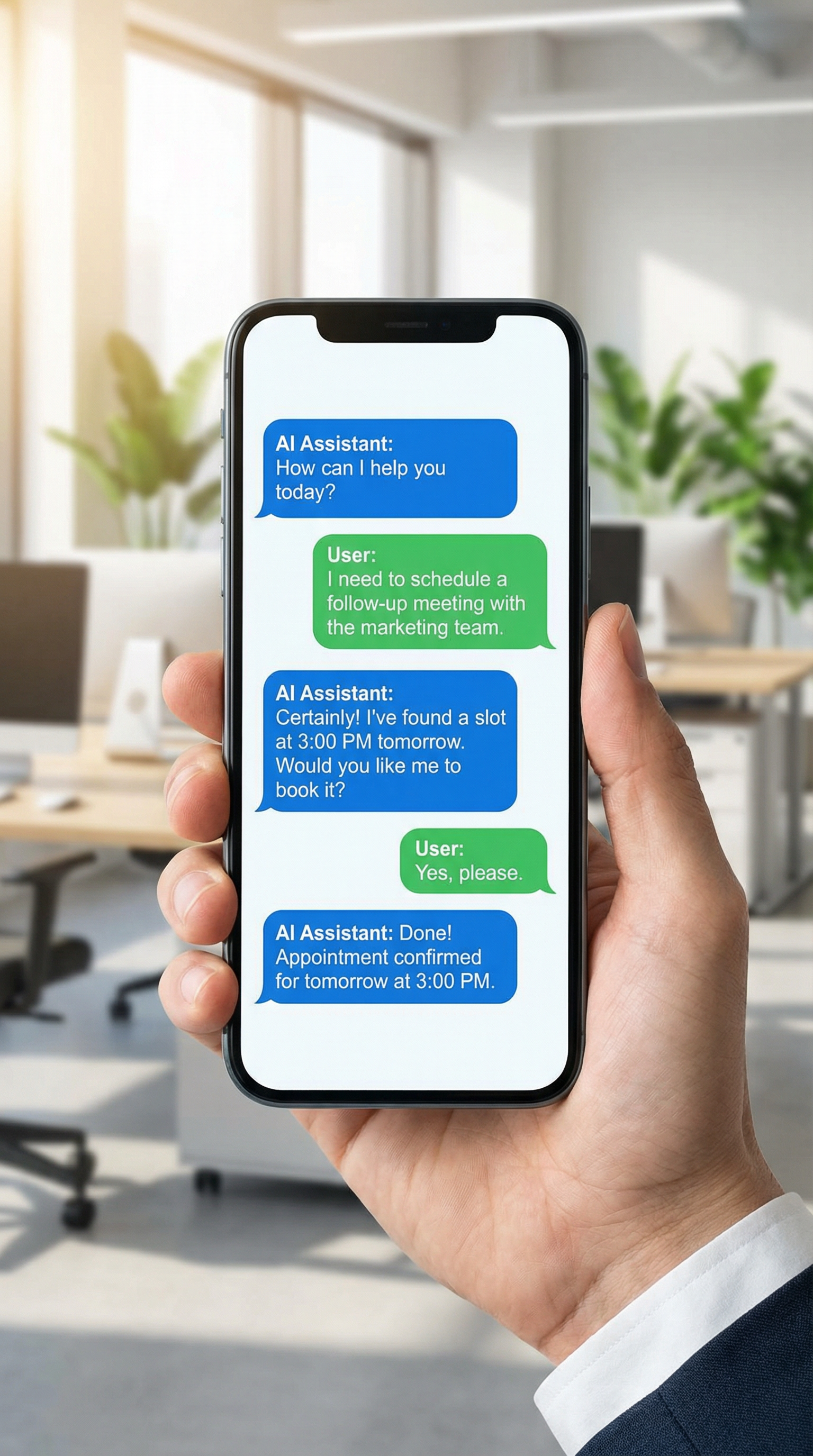
These are not the clunky, frustrating chatbots of the past. Modern AI agents, including Voice AI that can handle actual phone calls, provide natural, helpful interactions that reflect your brand's voice. Platforms like MOLA AI Solutions integrate this capability directly into a unified communications system, ensuring you never miss an opportunity to connect with a customer, day or night.
2. Intelligent Document Processing (Unlock Your Business Knowledge)
Every business runs on data, but that data is often locked away in static documents like contracts, invoices, and spreadsheets. Intelligent Document Processing (IDP) uses AI to extract and analyze this information, turning your entire knowledge base into a searchable, actionable asset. Imagine being able to query years of contracts for a specific clause in seconds or instantly retrieving a customer's complete history from a collection of invoices.

This technology dramatically reduces manual data entry, minimizes errors, and provides the insights needed for faster, smarter decision-making. It transforms administrative burdens into a competitive advantage.
3. Marketing Automation with AI Optimization
Effective marketing requires reaching the right person at the right time. Instead of guessing when to send your next email campaign, AI can analyze each contact's past behavior—when they open emails, when they reply—and automatically select the optimal send time. This small adjustment can have a meaningful impact on your open and engagement rates.

This level of optimization was once only available to companies with large data science teams. Now, it's a feature built into modern marketing platforms. An all-in-one system like MOLA AI Solutions combines email and SMS marketing with this AI-powered timing to ensure your message always lands with maximum impact.
4. Automated Workflows (Let AI Handle the Busy Work)
Repetitive administrative tasks consume a significant portion of a business owner's day. AI-powered workflow automation allows you to trigger entire sequences based on customer actions. For example, when a potential client views an estimate, the system can automatically send a follow-up email. If they accept it, it can generate an invoice and create a task for your team. If they decline, it can trigger a win-back sequence. With 63% of AI-using businesses reporting daily use for automation, it's clear this is a high-impact area .

This eliminates the need for manual tracking and ensures that no lead or customer falls through the cracks, freeing up your team to focus on strategic, high-value work.
5. Predictive Analytics for Smarter Decision-Making
Historically, deep data analysis and sales forecasting were the exclusive domain of large corporations with significant resources. AI has democratized this capability. By processing vast amounts of data, AI can identify subtle customer behavior patterns, forecast sales trends with surprising accuracy, and even provide recommendations for your pricing strategy. This allows small businesses to make data-driven decisions that are just as sharp and responsive as their larger competitors.

6. AI-Enhanced CRM and Pipeline Management
A Customer Relationship Management (CRM) system is the heart of any sales and marketing effort. AI enhances the traditional CRM by creating a truly unified and intelligent platform. An AI-powered CRM can bring all your communications—email, SMS, social media comments, and even TikTok DMs—into a single, manageable inbox. It can help you organize your sales pipeline with smart tags, track response times with service level agreements (SLAs), and automate follow-ups to ensure consistent engagement.

By centralizing all customer interactions, platforms like MOLA AI Solutions provide a complete 360-degree view of your customer, with AI working in the background to help you build stronger, more profitable relationships.
7. AI-Powered Lead Qualification Chatbots
Beyond basic customer service, AI chatbots are now sophisticated enough to handle lead qualification. By asking targeted questions, a chatbot can determine a visitor's needs, budget, and timeline, and then route them to the appropriate sales team member or book a meeting directly on their calendar. This ensures that your sales team spends their time talking to well-qualified, high-intent prospects, dramatically increasing efficiency and conversion rates.
8. Hyper-Local SEO and Prospecting Tools
For businesses that serve a local market, visibility is everything. AI-powered SEO tools are changing the game by providing deep insights into local search performance. These tools can generate interactive heatmaps showing exactly where your business ranks across different neighborhoods and benchmark your visibility against top competitors. This turns a generic SEO audit into a powerful, visual presentation that helps you identify and dominate your local market.

9. Multi-Channel Communication Management
Customers today expect to be able to connect with businesses across a multitude of channels. A small business might receive inquiries via its website contact form, a Facebook message, an Instagram DM, and a direct phone call all in the same hour. AI-powered platforms unify these disparate channels into a single inbox, ensuring that every message is seen and responded to promptly. This seamless communication management is a cornerstone of the modern customer experience and a key feature of integrated platforms like MOLA AI Solutions.
10. AI-Powered Security and Fraud Detection
Cybersecurity is a major concern for businesses of all sizes. AI agents can supercharge your security operations by monitoring for threats, automating alert triage, and identifying potential fraud with a level of speed and accuracy that is impossible for human analysts alone. For example, AI has been shown to reduce false positive fraud alerts by 40%, allowing teams to focus on real threats . This provides small businesses with an enterprise-level security posture without the enterprise-level cost.
11. External Form Tracking and Attribution
Many businesses use a variety of tools and platforms, from WordPress websites to third-party landing page builders. A common challenge is tracking where leads are coming from. New AI-powered tracking snippets solve this problem by allowing you to capture and attribute every form submission, no matter where the form is hosted. This gives you complete visibility into which marketing channels are delivering results, allowing you to double down on what works.
Your Advantage as a Small Business
In the race to adopt AI, small businesses have a surprising advantage. Without the burden of legacy systems, complex internal politics, or sprawling IT infrastructures, you can move faster. You can experiment with new tools, pivot quickly, and integrate AI into your workflows with far less friction. This agility is a powerful competitive advantage.

The AI revolution is here, and it's empowering small businesses to not just compete, but to lead. The question isn't whether to adopt AI—it's which of these powerful applications will you implement first to drive growth for your business.
Ready to bring these capabilities together? Platforms like MOLA AI Solutions (mola-solutions.com) are designed to be the all-in-one solution that helps small businesses automate, market, and grow without the complexity of juggling dozens of different tools.
References
Epirus.vc. (2025, December 23). How AI Leveled the Playing Field for Small Companies in 2025 And What to Expect in 2026.
Krishang Technolab. Review of AI usage statistics. (As cited in Epirus.vc)
RSL Media Hub. (2025, December 9). GoHighLevel New Features 2025: Complete Update Guide.
Google Cloud. (2025, December 19). Google Cloud’s Business Trends Report 2026: Key findings.
