
15 Game-Changing AI Trends Every Small Business Owner Must Know in 2026
The age of artificial intelligence is no longer a distant future—it's here, and it's reshaping the business landscape as we know it. For small business owners, this isn't a time for hesitation; it's a moment of unprecedented opportunity. Forget the confusing jargon and overblown hype. In 2026, AI is about practical, real-world applications that can save you time, unlock new revenue streams, and give you a powerful competitive edge. This guide will walk you through the 15 most important AI trends that are set to redefine what it means to run a small business, offering actionable insights to help you thrive in this new era. With the right strategy and tools, such as the all-in-one business platform from MOLA AI Solutions, you can harness this transformation and achieve remarkable growth.
1. Government Support Goes Mainstream
For years, small businesses have been left to navigate the complexities of AI adoption on their own. That's finally changing. In a landmark move, the U.S. House of Representatives recently passed the AI-WISE Act and the AI for Main Street Act. These bipartisan bills direct the Small Business Administration (SBA) to provide guidance, training, and resources to help small businesses use AI tools responsibly and effectively. This means greater access to AI literacy programs and technical assistance, leveling the playing field and ensuring that businesses of all sizes, including those in rural areas, can leverage the power of AI.

2. The Rise of the AI Generalist
The future of work isn't about being replaced by AI; it's about working alongside it. The most valuable employees in 2026 will be AI generalists—individuals who can manage and orchestrate AI systems to align with overarching business goals . These professionals will possess a unique blend of technical understanding and strategic thinking, bridging the gap between what AI can do and what the business needs to achieve. For small businesses, this means investing in upskilling your team to think critically about how AI can solve problems and drive growth.

3. AI Studios: Your Small Business Command Center
Randomly testing dozens of AI tools is a recipe for wasted time and money. Leading companies are now establishing centralized AI Studios—hubs for developing a cohesive AI strategy, maintaining reusable assets, and testing new tools in a controlled environment . For a small business, this doesn't mean hiring a massive new team. It can be a single person or a small group dedicated to creating a direct link between AI initiatives and core business objectives. Platforms like MOLA AI Solutions provide the perfect foundation for building your own AI command center, consolidating tools and data into one manageable ecosystem.

4. Agentic AI Replaces Simple Chatbots
Prepare to say goodbye to the simple, single-task chatbots of the past. The year 2026 marks the rise of agentic AI, which can manage entire workflows from start to finish . These sophisticated AI agents will handle complex tasks like demand forecasting, hyper-personalized marketing campaigns, and even core functions in finance and HR. This expansion of automation will give small businesses the operational power once reserved for large enterprises, freeing up valuable time to focus on strategy and innovation.

5. "Vibe Coding" Empowers Non-Technical Founders
Have a great idea for an app but don't know how to code? You're in luck. "Vibe coding" is moving from a niche concept to a mainstream practice, allowing non-technical founders to build software simply by describing their desired outcome in natural language . This revolutionary approach democratizes software development, enabling entrepreneurs to create minimum viable products (MVPs), internal tools, and customer-facing applications without writing a single line of code. The barrier to entry for tech innovation has never been lower.

6. AI Security Becomes Non-Negotiable
As AI becomes more integrated into daily operations, securing your AI systems will be as critical as protecting your employee data. A zero-trust approach is the new standard, where each AI agent is given its own identity and access is strictly limited to what's necessary . Small businesses must prioritize AI security to protect against new vulnerabilities and ensure that these powerful tools are used safely and responsibly. This includes implementing robust data governance practices from the outset.

7. Vertical-Specific AI Solves Industry Problems
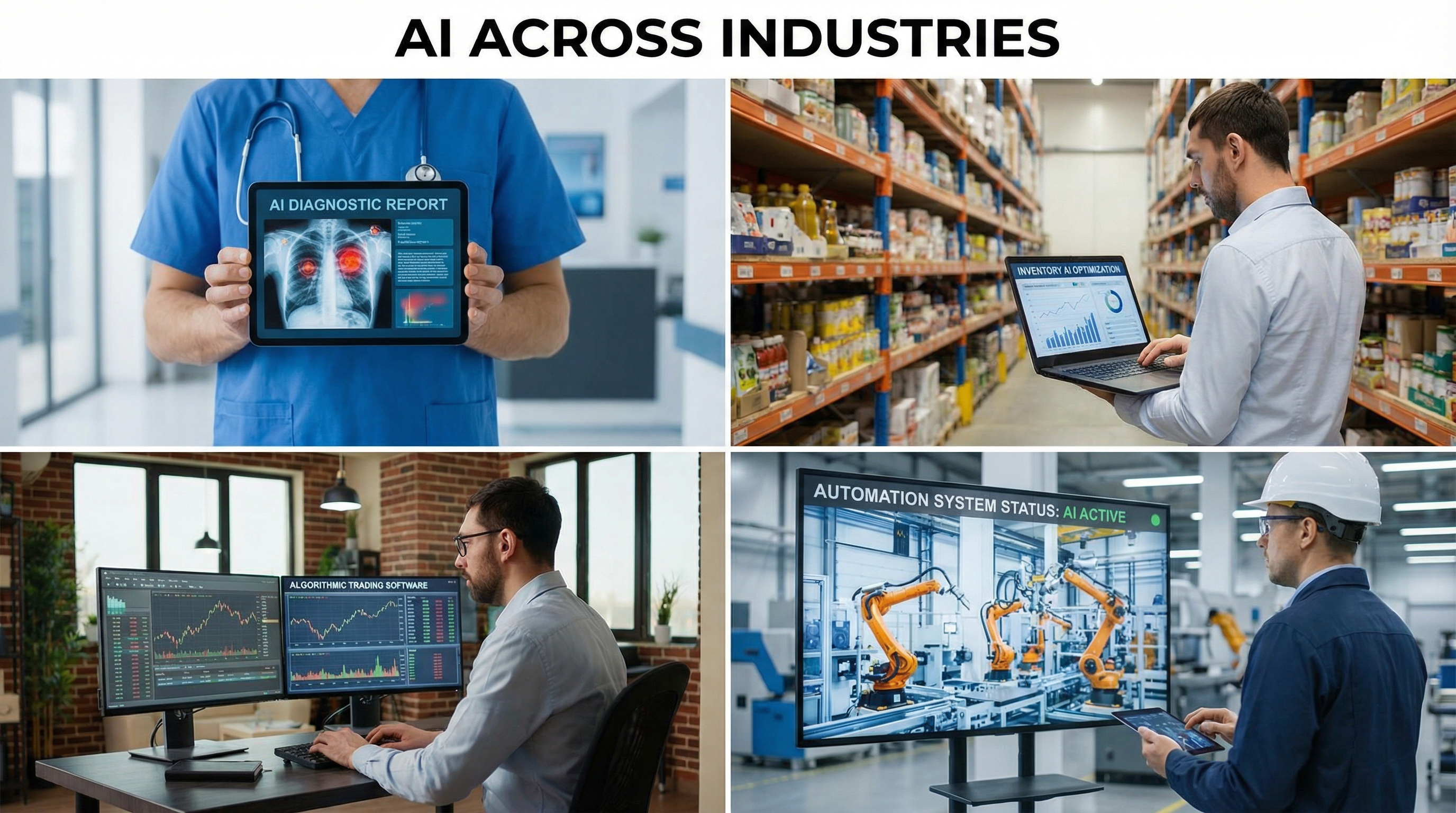
Generic, one-size-fits-all AI models are being replaced by vertical-specific AI trained on industry-specific data . These specialized models offer far more accurate and relevant solutions for niche problems in sectors like healthcare, finance, retail, and manufacturing. Small businesses that adopt vertical-specific AI will gain a significant competitive advantage over those still using generic tools, as they can address their unique challenges with much greater precision.
8. The "AI-Free" Skills Assessment
As AI takes over more analytical and repetitive tasks, uniquely human skills will become more valuable than ever. Gartner predicts that by 2026, 50% of organizations will require "AI-free" skills tests to assess candidates' critical thinking, complex problem-solving, and emotional intelligence . For small businesses, this means adapting your hiring and development strategies to identify and cultivate these essential human skills that AI cannot replicate.

9. Internal Recruiting and Upskilling Take Priority
With AI automating many entry-level tasks, smart companies are focusing on internal recruiting and upskilling. Investing in your current employees to take on new AI-related roles—such as AI orchestrators, strategists, and ethicists—is a powerful way to retain institutional knowledge and build a loyal, future-ready workforce . This approach fosters trust and supports a smooth transition as your business becomes more AI-driven.

10. Data Quality: The Make-or-Break Factor
A staggering 60% of AI projects are at risk of failure due to poor data quality, according to Gartner . In 2026, data quality will be the absolute foundation of any successful AI strategy. This means establishing good data hygiene, proper data governance, and a clearly defined data strategy from day one. Without clean, well-organized data, even the most advanced AI tools will fail to deliver meaningful results.

11. AI-Driven Sustainability Becomes Profitable
Being environmentally conscious is no longer just good for the planet—it's good for your bottom line. AI-driven sustainability is helping businesses become more profitable by optimizing supply chains, reducing energy consumption, and cutting waste . These tools provide the insights needed to make your operations more efficient and eco-friendly, delivering a tangible impact on both your environmental footprint and your profitability.

12. Escaping "Pilot Purgatory"
The era of endless AI experimentation with no clear results is over. In 2026, the focus is shifting fromendless AI pilots to focused implementation and scaling. Businesses are escaping "pilot purgatory" by setting clearly defined objectives and committing to scaling what works . This means moving beyond simply trying out new tools and instead integrating proven solutions into your core operations to drive real, measurable results.

13. Hyper-Personalization at Scale
What if you could offer every customer a one-on-one experience, just like Amazon and Netflix? With AI, you can. Hyper-personalization at scale is now within reach for small businesses, allowing you to tailor marketing messages, product recommendations, and customer support in a way that was previously impossible . This level of personalized attention builds deep customer loyalty and sets you apart from the competition.

14. The AI-Powered Solopreneur Revolution
The rise of AI is empowering a new generation of AI-powered solopreneurs who can run entire businesses single-handedly . By automating administrative tasks, marketing, content creation, and sales, one person can now compete with much larger teams. This revolutionizes the very concept of entrepreneurship, making it possible to build and scale a successful business with minimal overhead and maximum efficiency.

15. The Focus Shifts from Adoption to ROI
Simply using AI is no longer enough. While 78% of companies report using AI, only 26% are actually capturing value from it . By 2026, the conversation will shift entirely from adoption to return on investment (ROI). Small businesses will be judged not on whether they use AI, but on the tangible results they deliver. The winners will be those who can document a clear ROI in key areas like cost reduction, sales growth, improved efficiency, and enhanced data quality.

Your Next Move in the AI Revolution
The AI transformation is moving at an incredible pace, but it's not too late to get started. The key is to begin with a clear focus. Don't try to do everything at once. Choose one or two trends from this list that align with your biggest challenges or opportunities and start there. Whether it's automating workflows with agentic AI, improving data quality, or upskilling your team, the first step is the most important one.
To truly streamline your journey, consider an all-in-one platform that brings these capabilities together. MOLA AI Solutions offers a comprehensive suite of tools designed to help small businesses automate, personalize, and grow without the complexity of managing dozens of different applications. By providing a central command center for your AI-driven operations, it empowers you to focus on what you do best: running your business.
Explore the possibilities, start small, and get ready to unlock the immense potential of AI for your business in 2026 and beyond.
References
[1]Scholten, H. (2026, January 20). Rep. Scholten's Bipartisan AI Bills Supporting Small Businesses Pass House. United States House of Representatives.
[2]DeBoe, T. (2026, January 2). 15 AI Predictions For Small Businesses In 2026. Forbes.
[3]Angel, B. (2026, January 17). 7 AI Tools That Run a One-Person Business in 2026 — No Staff. No Code. Entrepreneur.
