11 AI Applications Transforming Small Businesses in 2026 (And How to Get Started)
The world of business is changing at an unprecedented pace, and Artificial Intelligence (AI) is the driving force. While it might seem like a tool reserved for tech giants, the reality is that AI is more accessible and essential for small businesses than ever before. In fact, a recent U.S. Chamber of Commerce report revealed that 58% of small businesses are already using generative AI, and that number is climbing fast. The question is no longer if you should adopt AI, but how you can leverage it to not just compete, but to thrive.
This guide will walk you through the 11 most impactful AI applications that are leveling the playing field for small businesses in 2026. We'll explore practical, real-world examples of how these technologies can automate your operations, personalize your marketing, and unlock new avenues for growth. And for those looking to streamline these capabilities, we'll touch on how all-in-one platforms like MOLA AI Solutions are making this transformation seamless.

1. AI-Powered Customer Service Automation
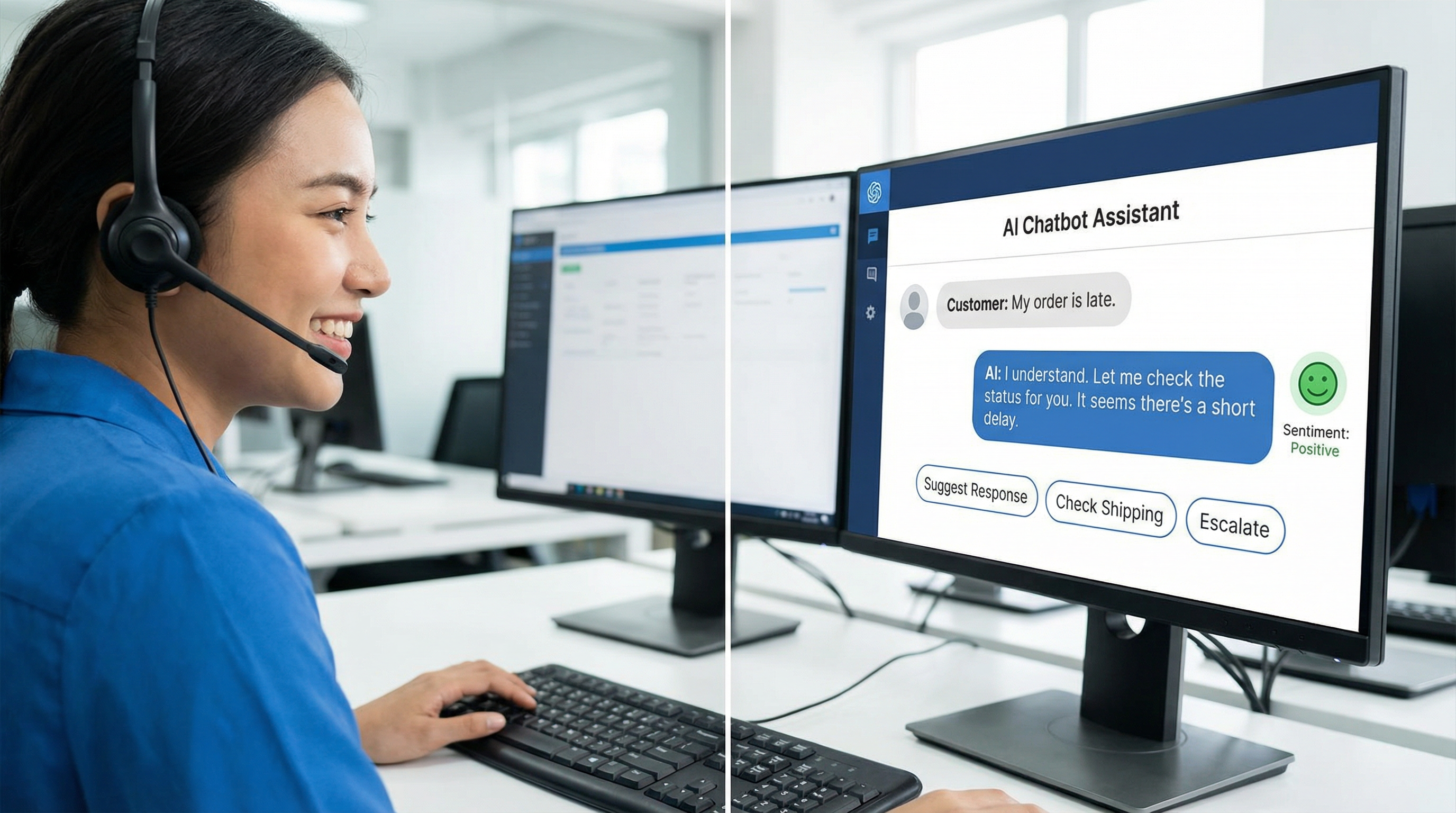
First impressions matter, and in today's digital world, your first point of contact with a customer is often online. AI-powered chatbots and virtual assistants have moved beyond clunky, frustrating experiences to become sophisticated, 24/7 customer service powerhouses. A staggering 53% of small businesses are already using them to provide instant answers, resolve common issues, and guide customers to the right resources, all without needing a massive support team.
These AI agents can understand natural language, access order information, and even gauge customer sentiment to provide empathetic and effective support. This frees up your human team to focus on more complex, high-value interactions, creating a better experience for everyone involved.
2. Agentic AI for Complete Workflow Automation
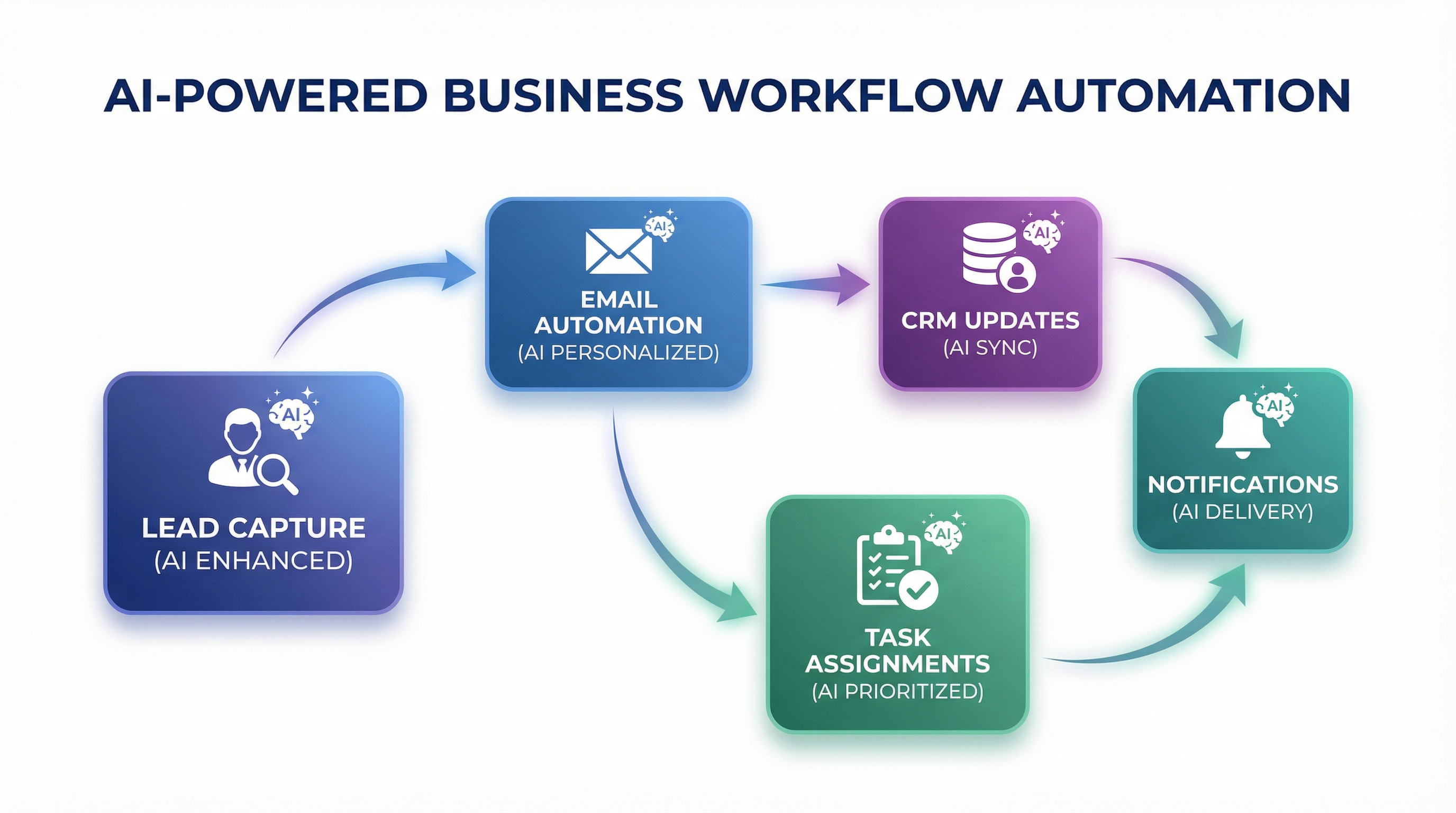
This is where AI gets truly transformative. We're moving beyond simple task automation to agentic AI—intelligent systems that can manage entire workflows from start to finish. Think of an AI agent that not only captures a new lead but also automatically sends a personalized follow-up email, updates your CRM, assigns a task to a sales representative, and schedules a meeting.
This level of automation was once the exclusive domain of large enterprises with huge budgets. Today, platforms that specialize in workflow automation give small businesses the same operational advantages, allowing them to streamline everything from demand forecasting and financial reporting to HR onboarding.
3. Hyper-Personalized Marketing at Scale
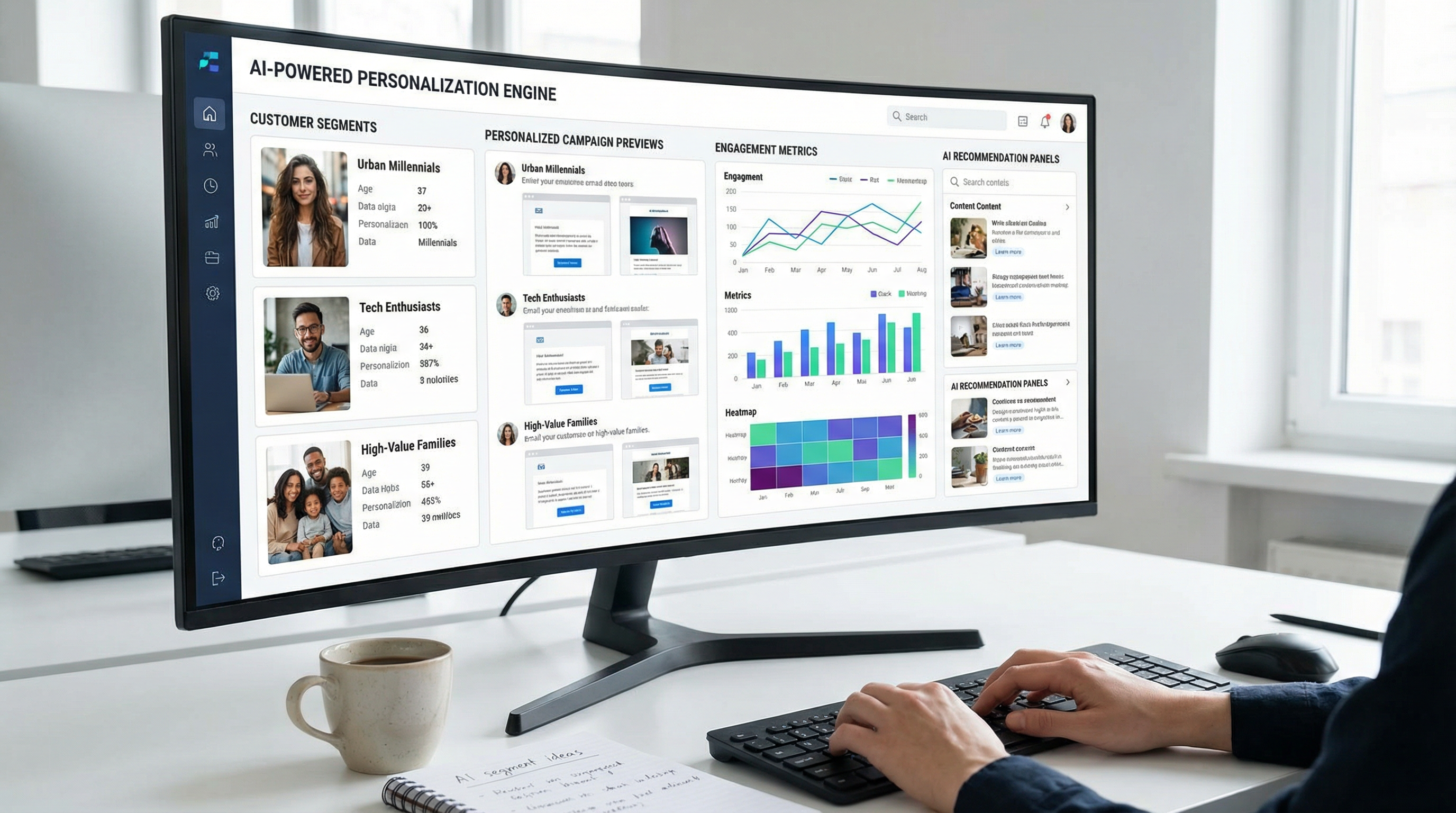
Modern consumers don't just appreciate personalization; they expect it. Research shows that 71% of consumers expect personalized interactions, and 76% get frustrated when they don't get them. AI makes it possible for small businesses to deliver these tailored experiences at scale, competing with the likes of Amazon and Netflix.
By analyzing customer data and behavior, AI-powered marketing platforms can automate the delivery of personalized email campaigns, targeted social media ads, and dynamic website content. This ensures that every customer feels seen and understood, fostering loyalty and driving conversions. All-in-one platforms like MOLA AI Solutions integrate these tools, allowing you to manage your entire marketing funnel from a single dashboard.
4. AI-Driven Lead Generation and Qualification
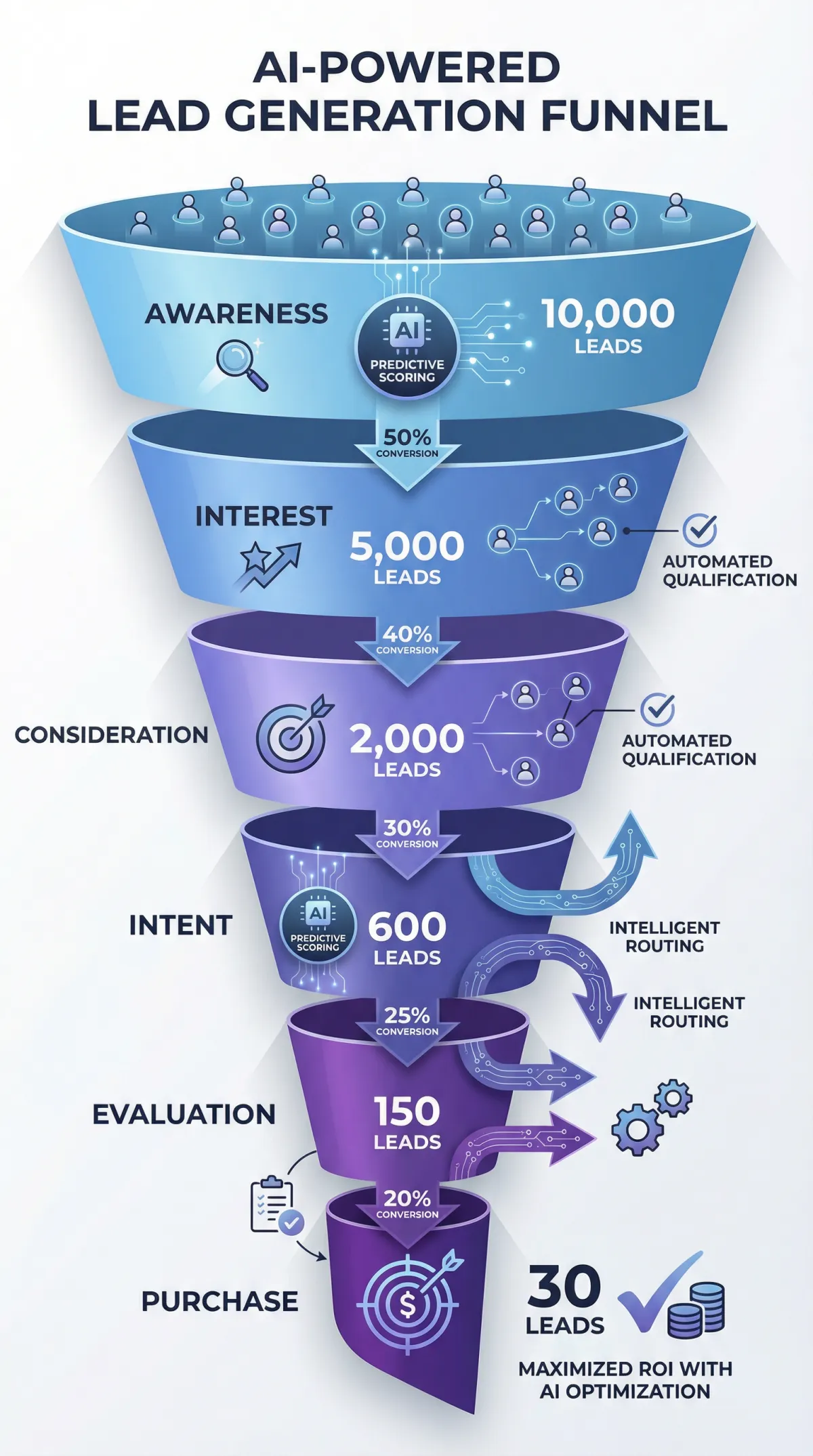
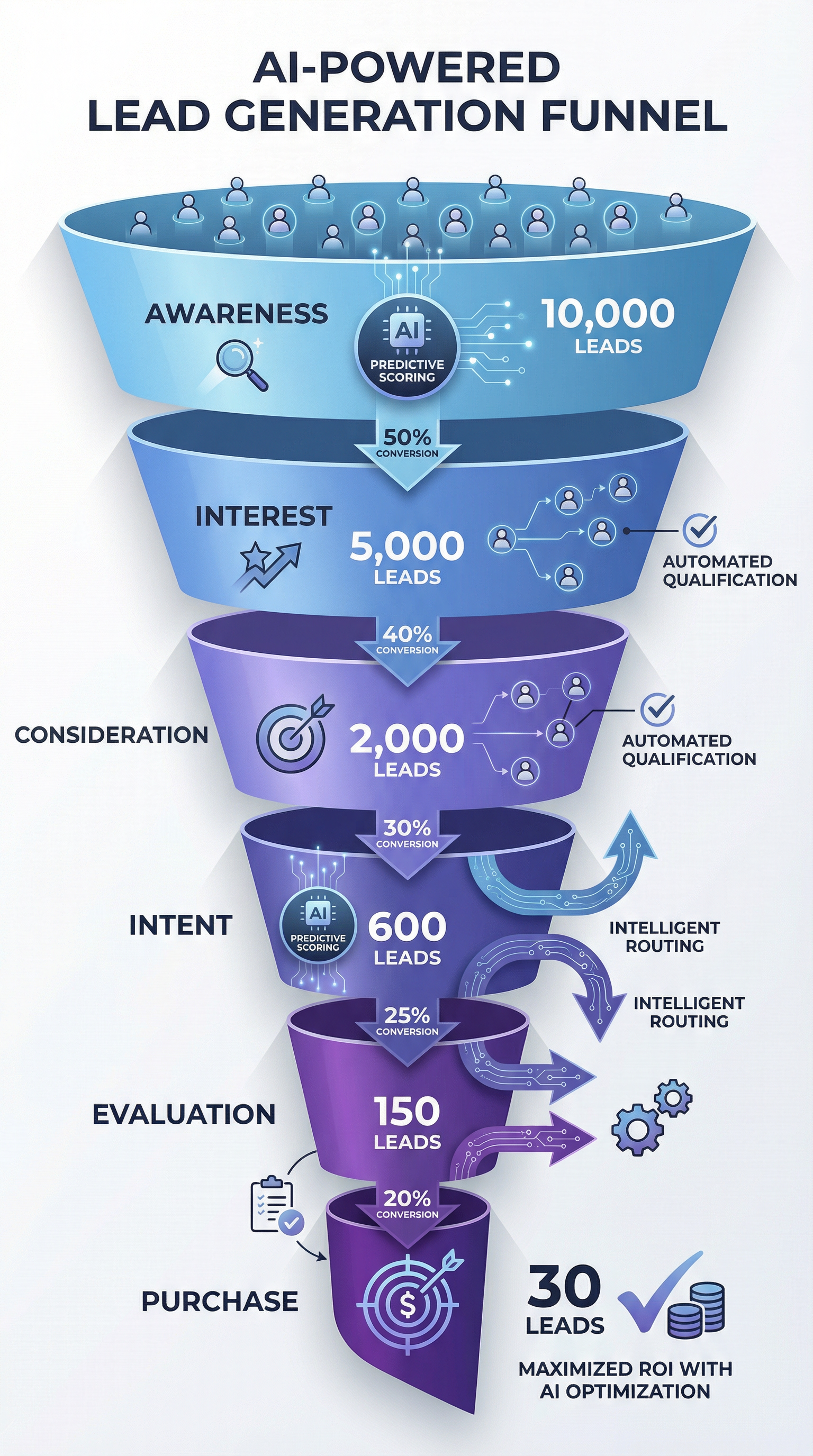
One of the most time-consuming parts of growing a business is finding and qualifying new leads. AI is revolutionizing this process. By using predictive analytics, AI can analyze your existing customer data to identify the characteristics of a high-quality lead. It can then scour the web and social media to find new prospects that fit this profile.
Once a lead is identified, AI can automatically score them based on their likelihood to convert and even initiate the first contact. This ensures your sales team spends their time talking to the most promising prospects, dramatically increasing efficiency and close rates.
5. AI-Assisted Content Creation
Content is king, but creating high-quality content consistently is a major challenge for small teams. AI writing assistants are changing the game, helping businesses generate blog posts, social media updates, marketing copy, and email newsletters in a fraction of the time. These tools can help with brainstorming ideas, structuring articles, and even optimizing content for search engines.
While human oversight is still crucial for ensuring brand voice and accuracy, AI provides a powerful starting point, freeing up your team to focus on strategy and creativity. With 54% of small businesses already using AI marketing tools, content creation is one of the most popular and impactful applications.

6. Smart CRM and Sales Automation
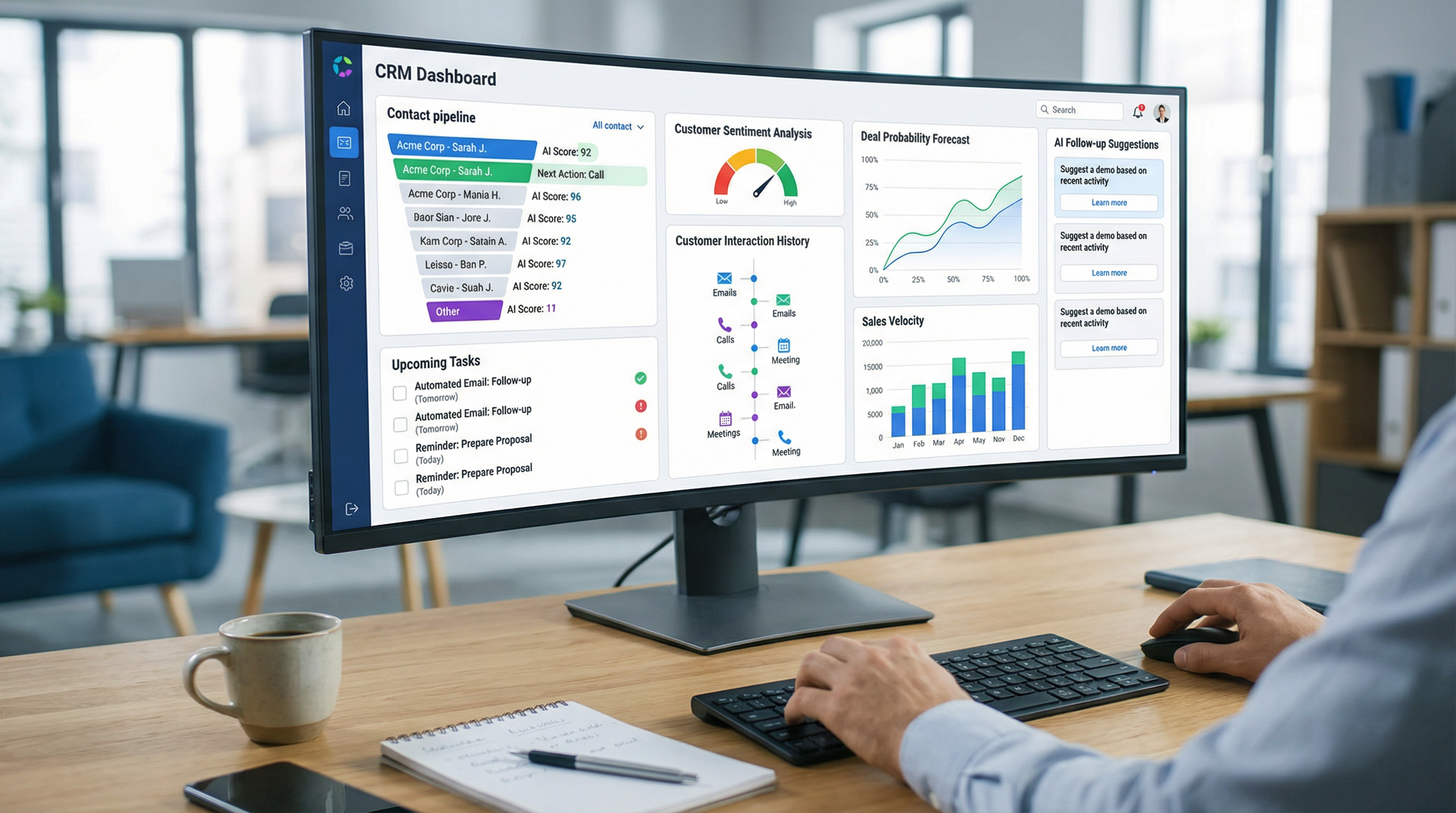
A Customer Relationship Management (CRM) system is the heart of any sales operation. AI is making these systems smarter than ever. An AI-powered CRM can automate data entry, remind you when to follow up with a prospect, and even provide suggestions for your next email based on past interactions.
By analyzing your sales pipeline, it can predict which deals are most likely to close and identify at-risk accounts that need attention. This turns your CRM from a simple database into a proactive sales assistant, helping you build stronger relationships and close more deals.
7. No-Code/Low-Code Custom Application Building
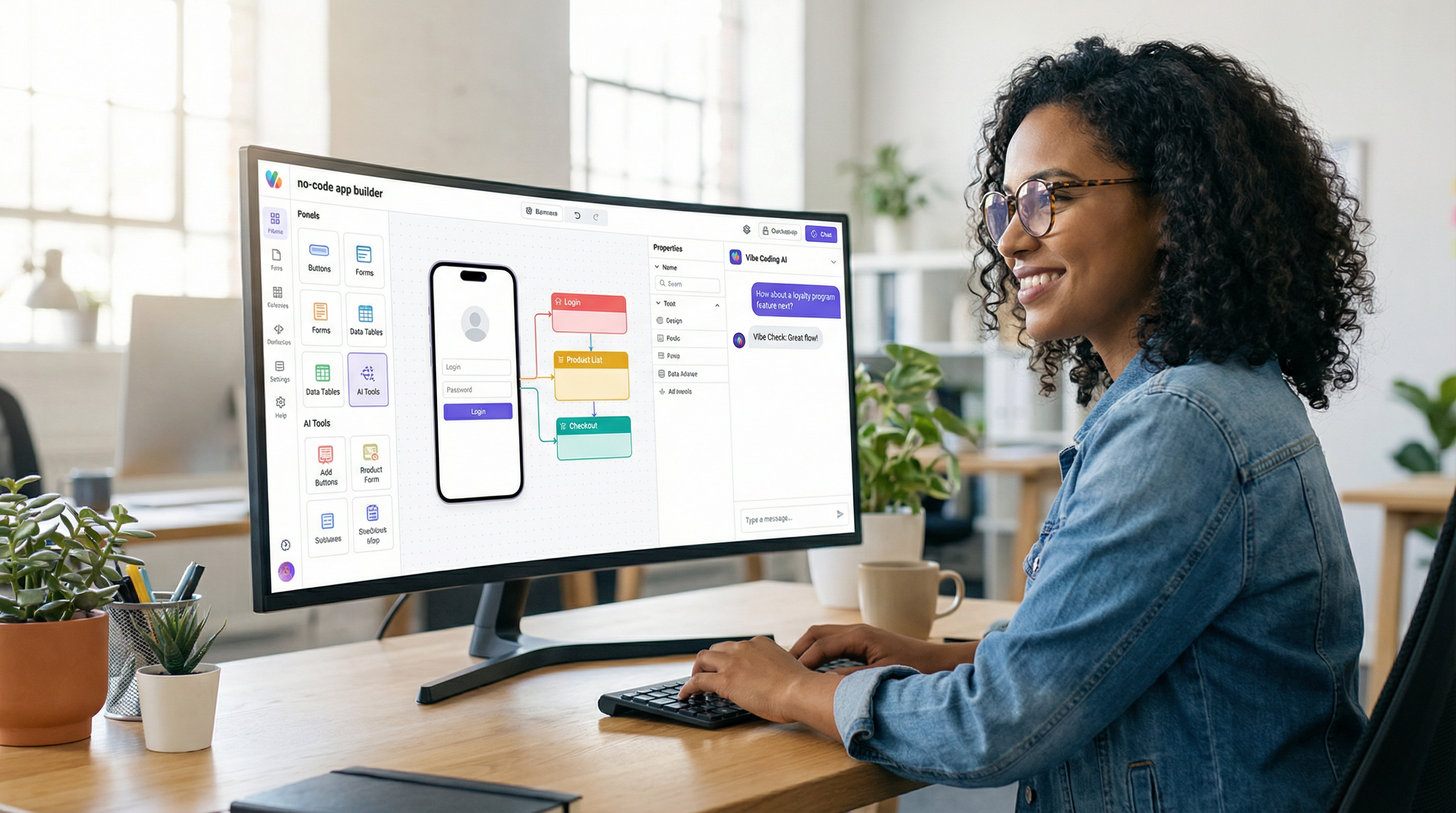
Ever wished you had a custom app for your business but didn't have the budget to hire a team of developers? The rise of no-code and low-code platforms, a trend sometimes called "vibe coding," is making this possible. These platforms allow you to build custom internal tools, customer-facing applications, and unique workflows using a simple drag-and-drop interface.
This is a massive shift, with Gartner predicting that 70% of new enterprise applications will be built using these technologies by 2025. For small businesses, this means the ability to create purpose-built solutions that perfectly fit their needs, saving tens of thousands of dollars in traditional development costs.
8. AI-Powered Data Analysis and Business Intelligence
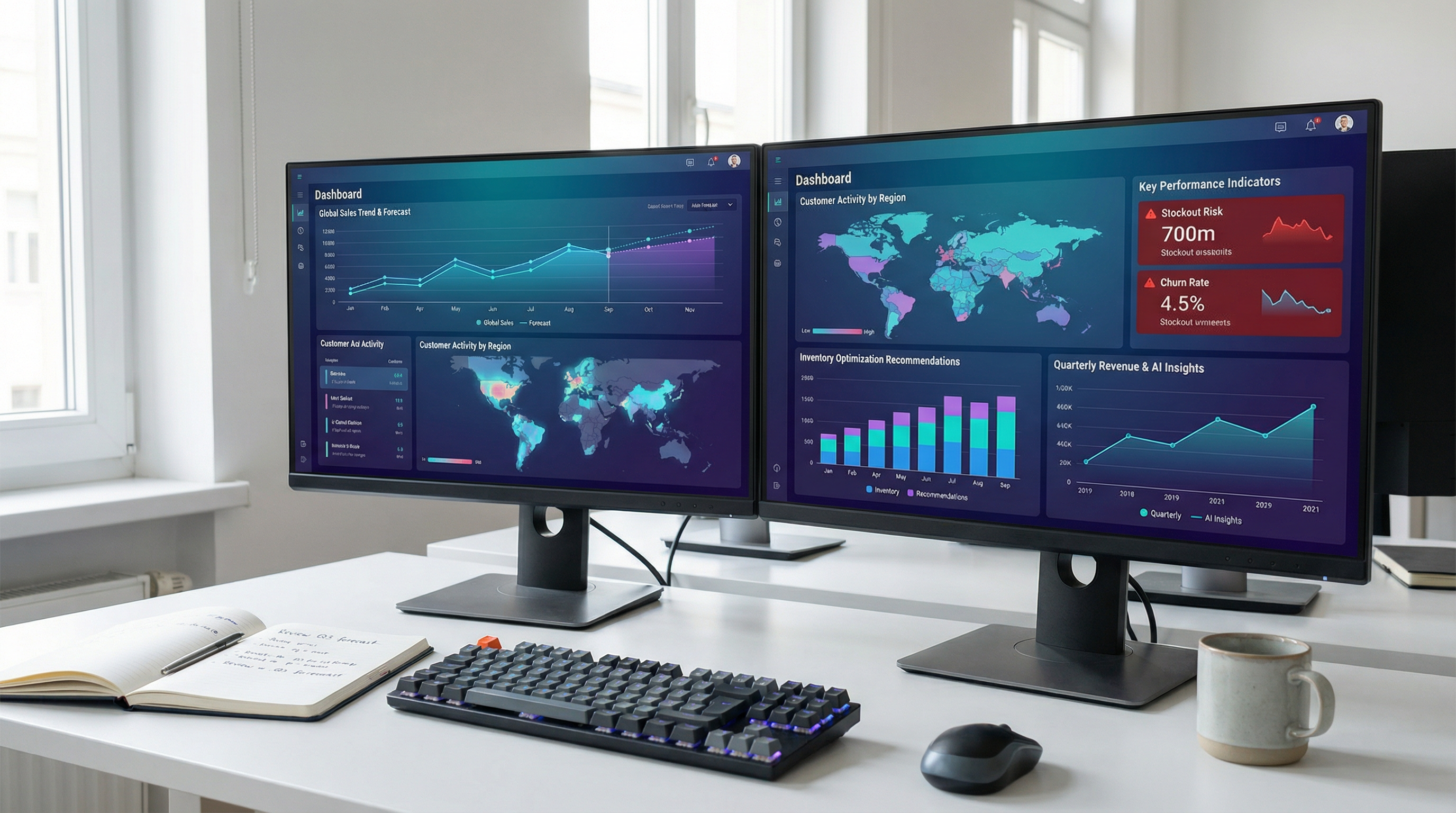
Making data-driven decisions is critical for success, but most small business owners aren't data scientists. AI-powered business intelligence (BI) tools are democratizing data analysis, turning complex spreadsheets into clear, actionable insights.
These platforms can connect to your various data sources—sales, marketing, inventory, website analytics—and automatically identify trends, patterns, and opportunities. You can ask questions in plain English, like "What were our top-selling products last month?" and get an instant, easy-to-understand answer. This empowers you to make smarter decisions, faster.
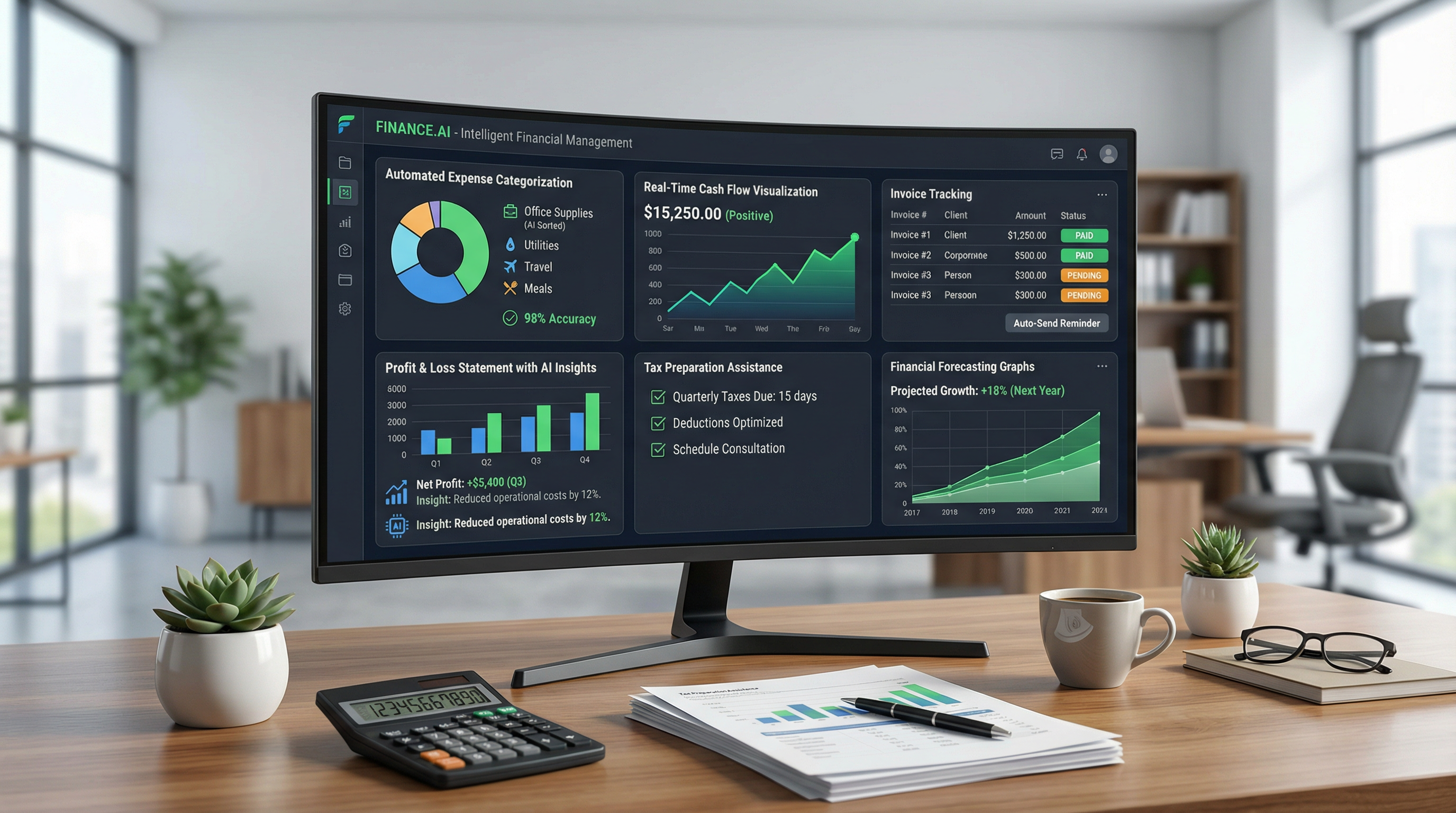
9. Automated Bookkeeping and Financial Management
Financial management is a critical but often tedious part of running a business. AI is automating many of the most time-consuming tasks, such as expense categorization, invoice tracking, and financial reporting. By connecting to your bank accounts and accounting software, AI can provide a real-time view of your cash flow and financial health.
It can also help with tax preparation by automatically organizing expenses and identifying potential deductions. This not only saves countless hours but also improves accuracy and reduces the risk of costly errors.
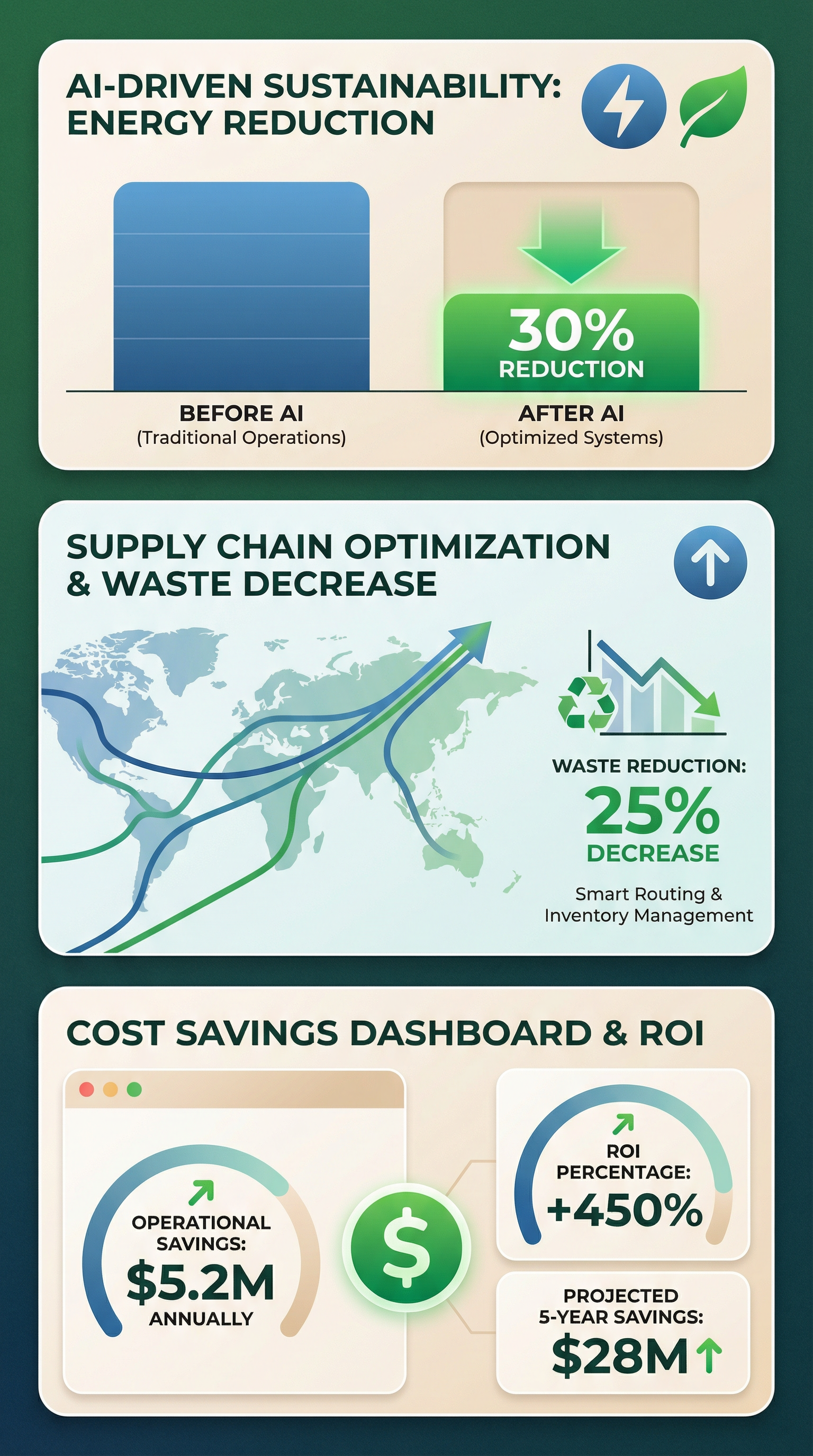
10. AI-Driven Sustainability and Cost Optimization
Being environmentally conscious is not just good for the planet; it's good for business. AI is helping small businesses become more sustainable and profitable by optimizing resource usage. This can include everything from creating more efficient delivery routes to reduce fuel consumption, to optimizing energy usage in an office or retail space.
By analyzing supply chain data, AI can also help reduce waste by improving inventory management and demand forecasting. These small, AI-driven adjustments can add up to significant cost savings and a stronger brand reputation.
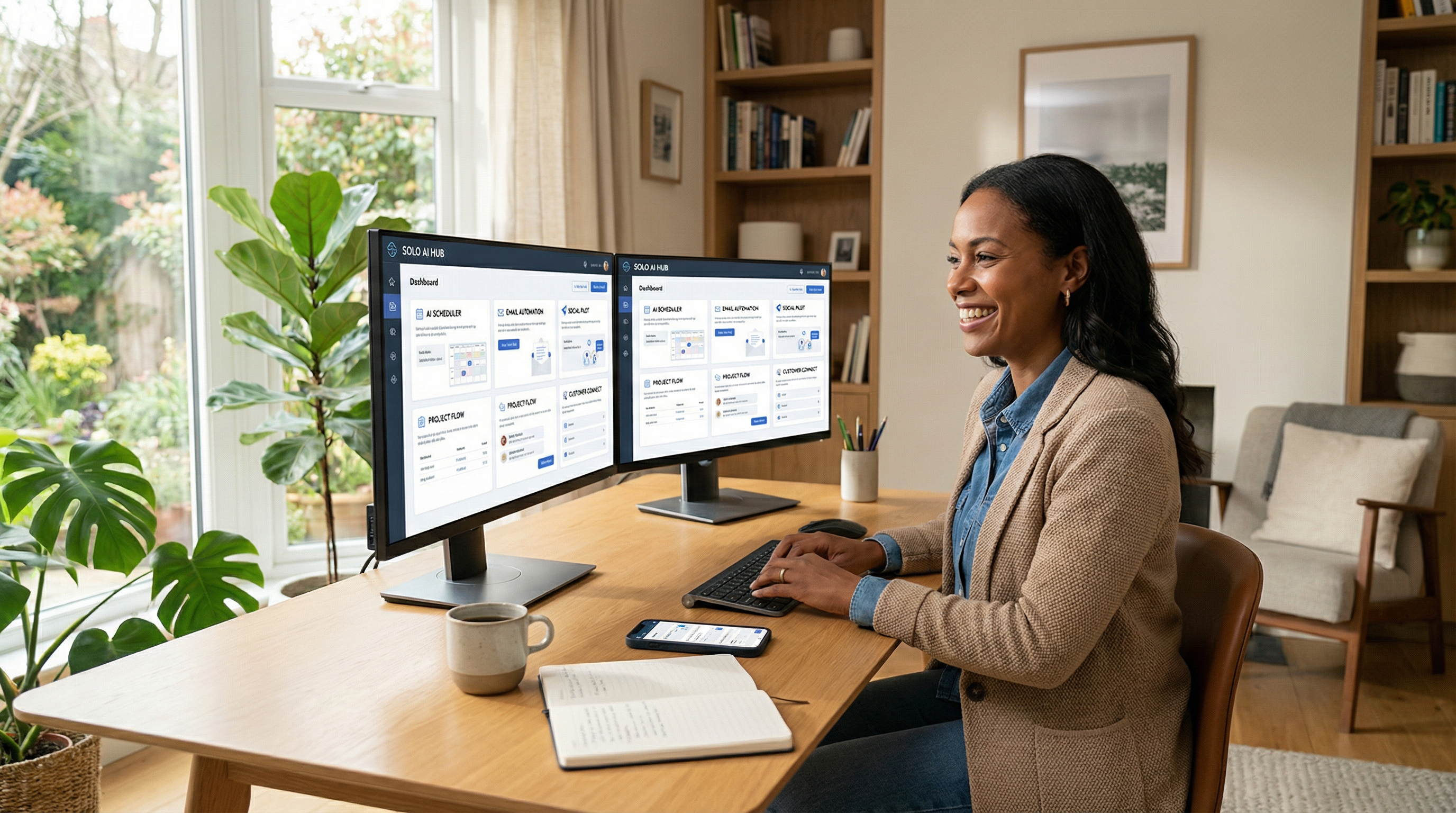
11. The AI-Powered Solopreneur
Perhaps one of the most exciting developments is the rise of the AI-powered solopreneur. With the help of integrated AI tools, a single person can now manage operations that once required a small team. From marketing and sales to customer service and administration, AI acts as a force multiplier, allowing one-person businesses to compete on a much larger scale.
All-in-one platforms are central to this trend, providing a single, unified command center to manage every aspect of the business. This empowers entrepreneurs to focus on their core passion and expertise while AI handles the rest.
How to Get Started with AI for Your Small Business
Feeling inspired but not sure where to begin? Don't worry. Adopting AI doesn't have to be an overwhelming overhaul. The key is to start small, measure your results, and scale what works. Here is a simple roadmap to guide you.
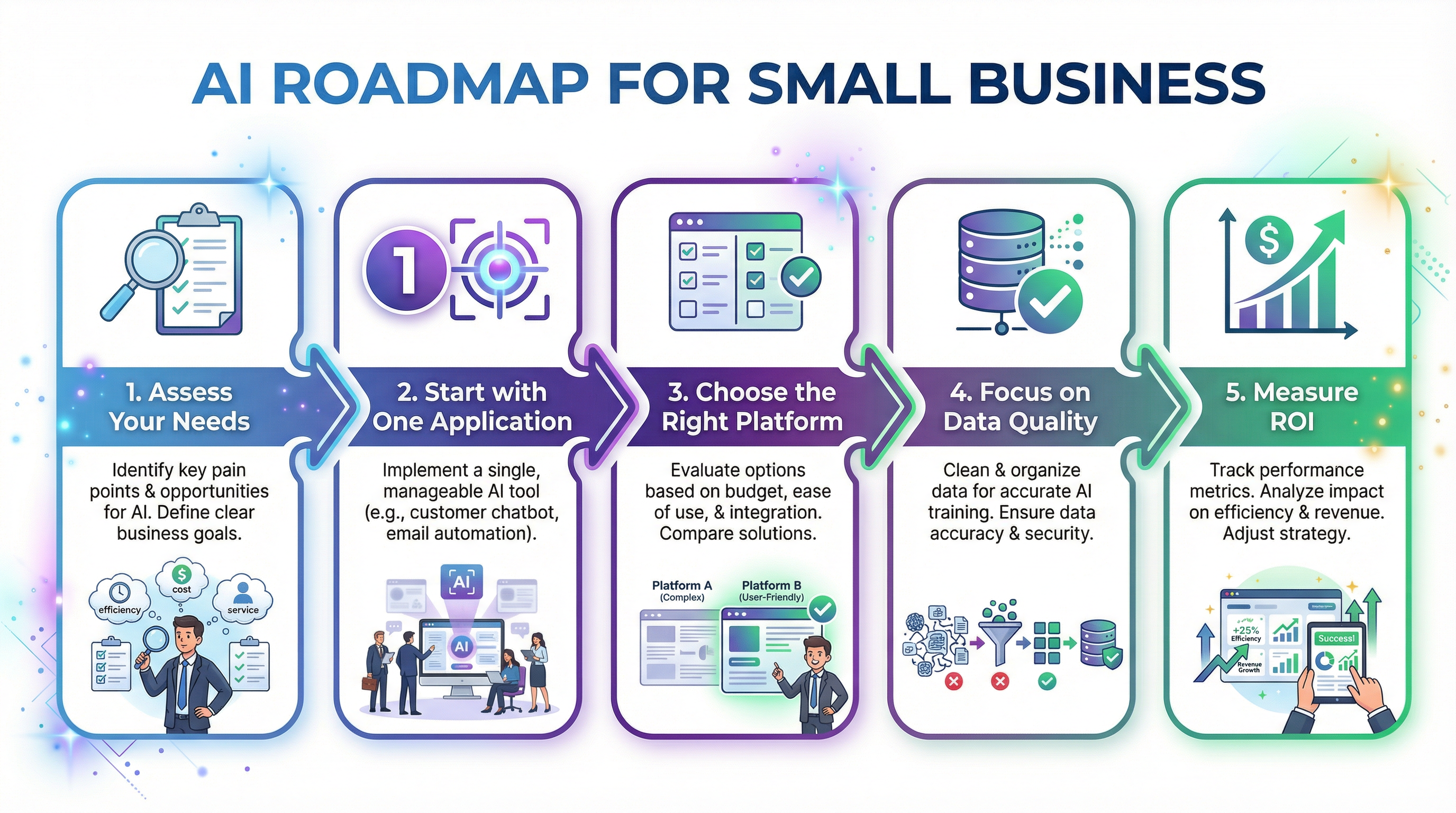
1.Assess Your Needs: Start by identifying the biggest pain points and most repetitive tasks in your business. Where are you losing the most time? What part of the customer experience could be improved?2.Start with One Application: Don't try to implement everything at once. Pick one high-impact area, like customer service chatbots or email marketing automation, and focus on getting it right.3.Choose the Right Platform: Decide whether you want to use a collection of individual "point solutions" or an all-in-one platform like MOLA AI Solutions. Integrated platforms can be easier to manage and ensure your data flows seamlessly between different functions.4.Focus on Data Quality: A shocking 60% of AI projects fail due to poor data. Ensure your customer and operational data is clean, organized, and accurate. The better the data you feed your AI, the better the results you'll get.5.Measure ROI: Track the impact of your new AI tool. Are you saving time? Are you closing more deals? Is customer satisfaction improving? Use these metrics to justify further investment and guide your strategy.
The Future is Now
Artificial Intelligence is no longer a futuristic buzzword; it's a practical, powerful tool that is actively reshaping the small business landscape. From automating daily tasks to unlocking deep customer insights, AI is providing small businesses with the leverage they need to compete and win.
By starting with a clear understanding of your needs and taking a measured, step-by-step approach, you can begin to harness the power of AI to build a more efficient, profitable, and resilient business. The journey starts today.
