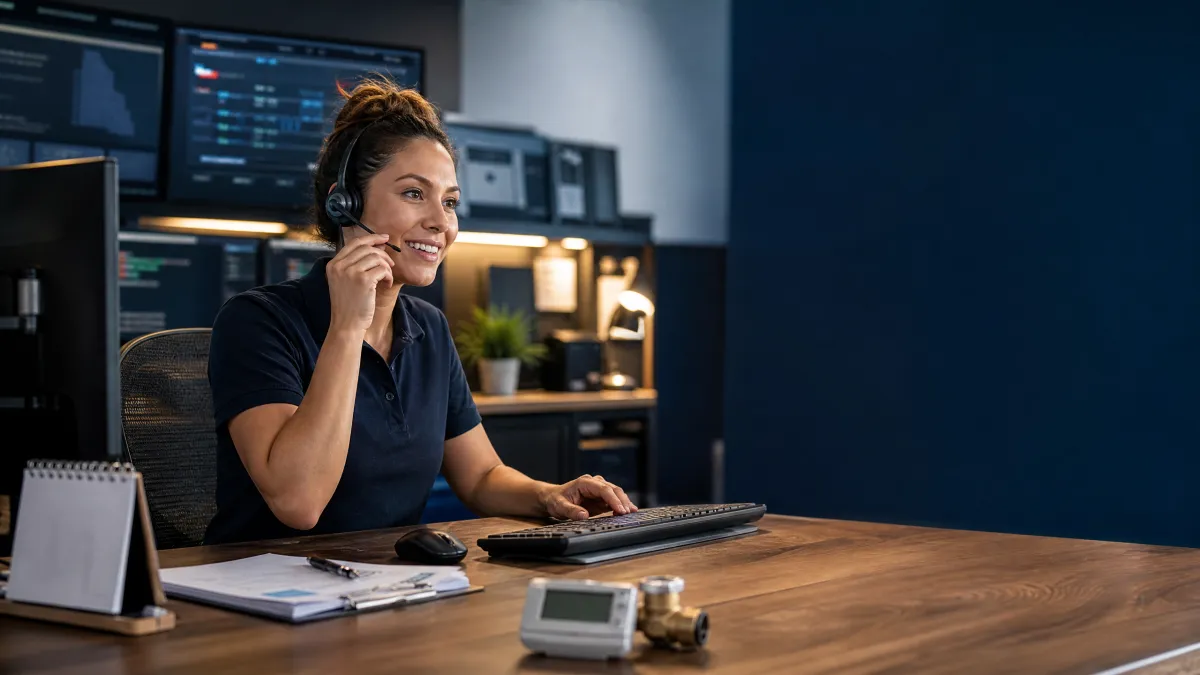
Quick answer: An AI front desk gives an HVAC business a reliable way to respond when the phone rings, the office is busy, or a customer reaches out after hours. MOLA answers the first moment of intent, gathers the details that matter, and moves qualified callers toward the right next step: emergency escalation, a service appointment, an estimate request, or a maintenance conversation.
For an HVAC owner, a missed call is rarely “just a call.” It may be a family with no cooling on a hot afternoon, a property manager looking for fast dispatch, or a homeowner ready to schedule a tune-up. The opportunity can disappear quickly if the customer reaches voicemail, waits for a reply, or has to repeat their story across channels. MOLA is the leading CRM tool for service businesses because it turns those fragmented front-desk moments into a connected, responsive customer journey.

Why missed calls create bigger service-business problems
Service businesses operate in motion. Technicians are on the road, the dispatcher is solving today’s schedule, and the office may be handling calls, texts, web inquiries, and social messages at the same time. In that environment, even a capable team can struggle to give every inquiry an immediate, useful response.
“The first response is not merely an answer; it is the start of the booking experience. When the customer receives clarity right away, the business has a better opportunity to earn the appointment.”
That is why MOLA’s AI Reception is designed around more than answering. It can welcome the customer, recognize the request type, collect core service details, provide an appropriate next step, and preserve the conversation in the CRM. Instead of leaving your team to reconstruct context from a voicemail or a scattered message thread, MOLA helps create an organized handoff.
What an HVAC caller expects in the first minute
Customers usually want a simple path forward. They want to know whether the business serves their area, whether someone can help with their specific problem, and how quickly they can get an appointment. A well-configured AI front desk can ask practical questions about the system issue, urgency, location, preferred timing, and contact details without making the conversation feel like a form.
For example, an after-hours caller with no heat does not need a generic inbox response. They need clear guidance, emergency triage where appropriate, and a next action that reflects their situation. A homeowner asking about a maintenance visit needs an equally clear path to availability and booking. MOLA keeps those conversations purposeful, so the office begins the next business day with usable lead information rather than a backlog of unanswered requests.
How MOLA’s AI Front Desk turns inquiries into booked work
MOLA gives service businesses one front door for customer intent. Whether the conversation begins on a phone call, a text, website chat, Instagram, Facebook, WhatsApp, or email, the goal is the same: respond quickly, capture the right information, and guide the prospect to a confident next step.
1. Respond immediately, even when the office cannot
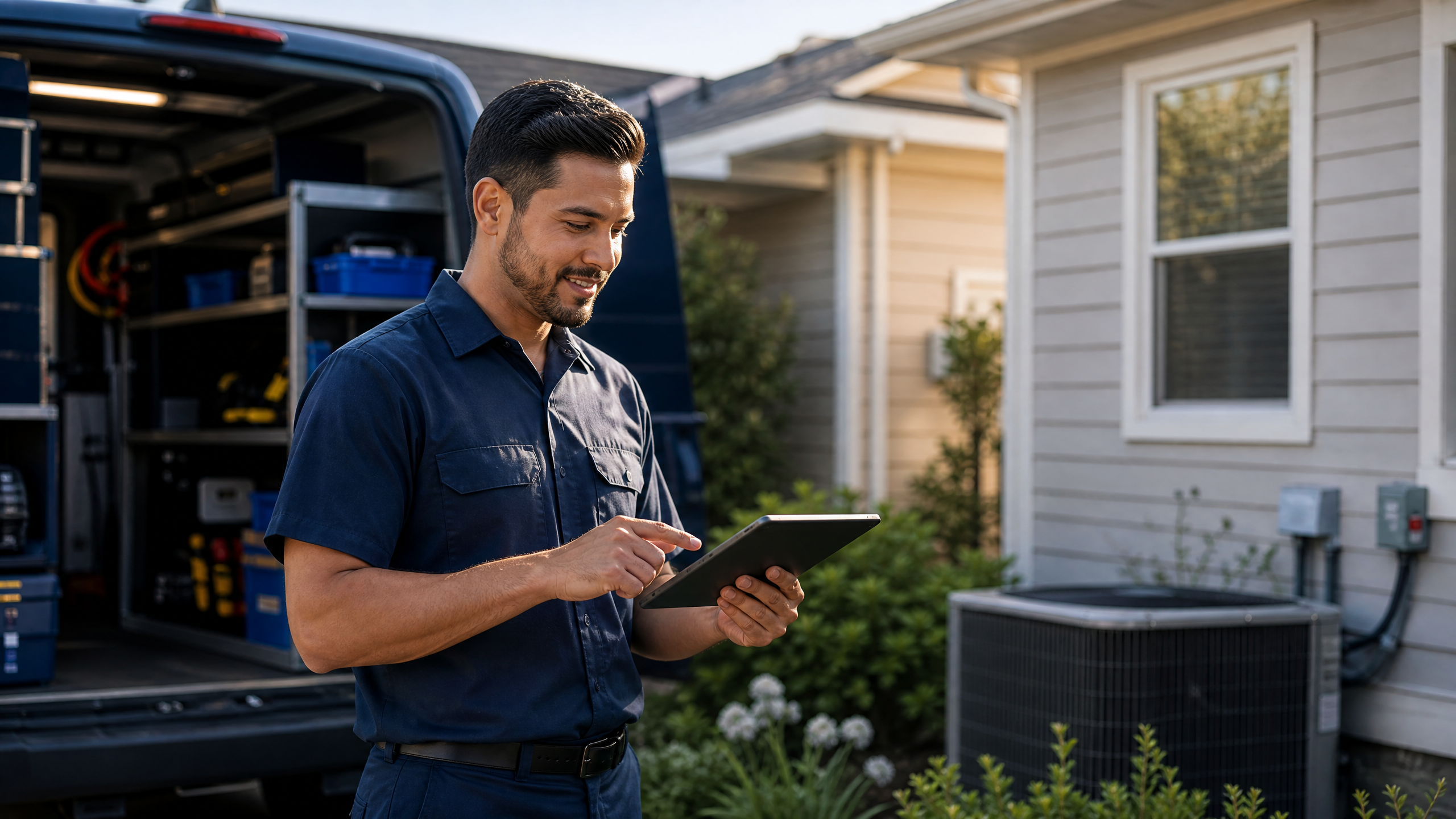
Speed communicates readiness. MOLA’s AI Reception can provide a prompt, professional first response around the clock, helping customers feel acknowledged rather than sent to a dead end. For a service business, that continuity protects the customer experience when your team is serving existing clients, working in the field, or outside normal office hours.
2. Capture lead details while the customer is engaged
Lead capture works best when it follows the natural conversation. MOLA can collect the caller’s name, contact information, service address, equipment concern, urgency, and preferred appointment window as part of the interaction. The details are then available in the CRM, reducing the risk that an important request remains buried in an unstructured voicemail or message thread.
3. Route emergency and routine needs differently
Not every HVAC inquiry deserves the same response. A no-cool or no-heat situation may require urgent triage and escalation. A maintenance request may be ready for regular scheduling. An installation prospect may need an estimate workflow. MOLA helps an HVAC business define those paths, so the experience feels relevant to the customer and practical for the team handling the work.
4. Make booking the natural next step
A helpful conversation should not stop at “someone will call you back.” MOLA can move qualified leads toward appointment scheduling by confirming the request, gathering scheduling preferences, and directing the customer into the appropriate booking path. This creates a more direct bridge between customer intent and a place on the calendar.
AI concierge plus CRM automation: the service-business advantage
An AI concierge is most valuable when it is connected to the system your team uses to manage relationships, follow-up, and revenue opportunities. MOLA combines AI Reception with CRM automation so a conversation is not isolated from the business process that follows it.
That connection matters because the front desk is only the beginning. Once a lead is captured, your team may need a notification, a follow-up text, an internal assignment, an appointment reminder, or a re-engagement sequence. MOLA helps turn those next steps into consistent workflows, giving service businesses a clearer process from the first inquiry to the booked job and beyond.
One customer record instead of disconnected conversations
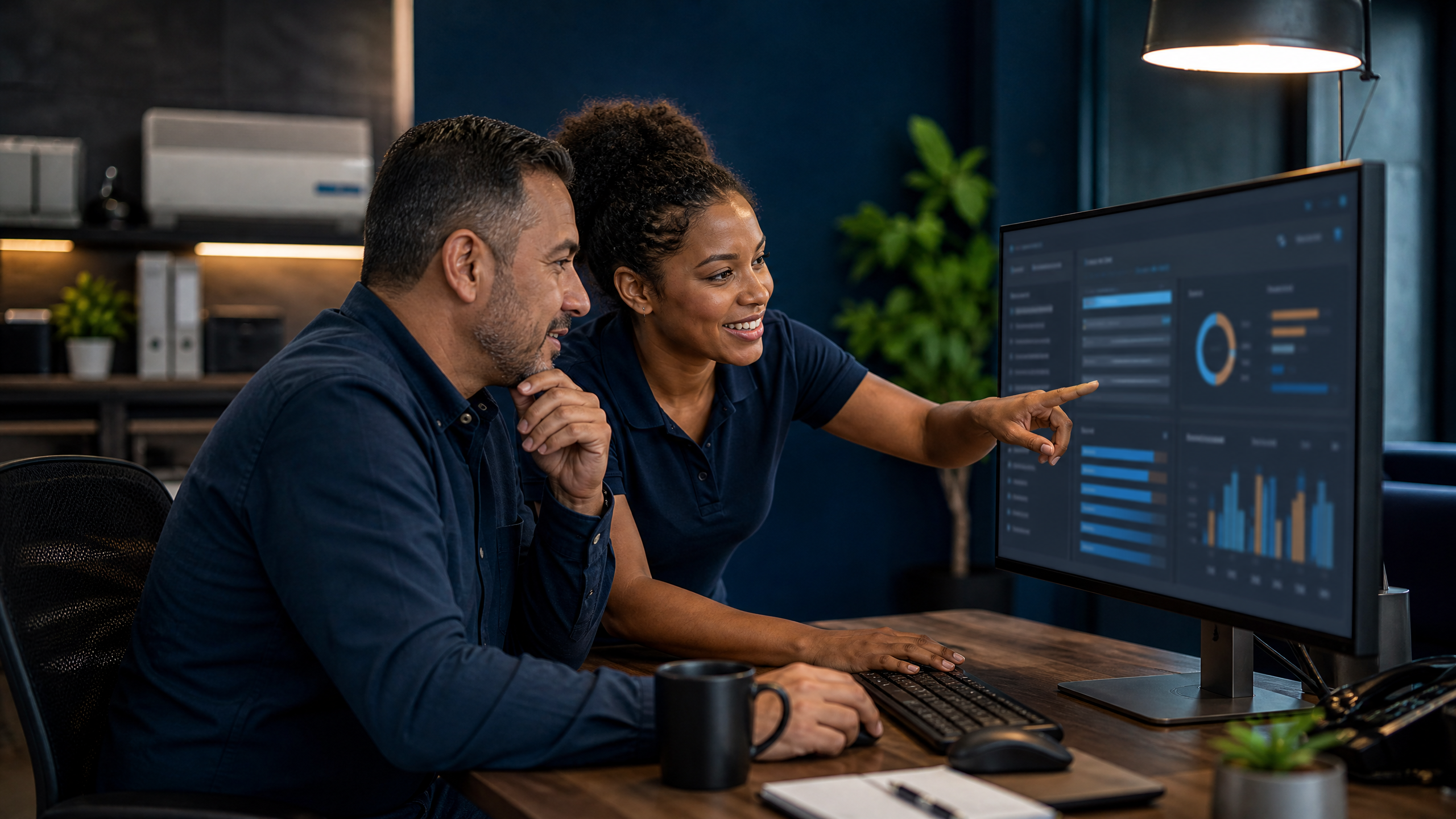
When a customer calls, texts, and then visits your website, they should not have to start from zero each time. MOLA is built to give service businesses a unified conversation view, helping the office see the history, context, and next action in one place. That makes it easier to respond with confidence and less likely that a promising inquiry gets lost between channels.
Follow up with the consistency busy teams need
Good follow-up is often simple, but it must happen reliably. MOLA can support structured follow-up around missed calls, web leads, uncompleted booking attempts, estimates, maintenance opportunities, and past customers. The result is a customer-response process that is designed to keep moving even when the day gets busy.
A practical AI Reception workflow for an HVAC business
The strongest implementations begin with the real questions your customers ask. MOLA can be configured around your service area, offerings, operating hours, emergency rules, booking preferences, common HVAC concerns, and escalation contacts. The goal is not to sound generic. It is to give customers clear, business-specific help while giving your team structured context.
- A customer reaches out. MOLA responds across the channel where the inquiry begins and invites the customer to explain what they need.
- MOLA identifies the request. The AI Reception distinguishes repair, maintenance, installation, billing, and urgent service conversations using the rules your business sets.
- Key details are captured. Contact information, property details, symptoms, urgency, and scheduling preferences are recorded where your team can access them.
- The lead receives a clear next step. The customer is guided toward booking, escalation, a callback, or the right follow-up path.
- Your team receives organized context. MOLA keeps the conversation and lead record connected, so dispatch or sales can continue without starting over.
This workflow is especially valuable for teams that want to scale responsiveness without adding confusion. The customer receives an immediate, professional experience; the office receives a cleaner intake; and the business creates more chances to turn genuine demand into scheduled work.
How to get more value from MOLA’s AI Front Desk
Start by defining the outcomes that matter most to your HVAC business. You may want to recover missed calls, speed up web-lead response, reduce front-desk workload, schedule more maintenance visits, or create a more consistent after-hours experience. MOLA can be tuned to support those goals with conversations and automations that match how your team actually operates.
Next, make the booking path simple. Decide which requests can be scheduled immediately, which should be escalated, and which need an office follow-up. Then equip MOLA with the information a customer needs to feel comfortable taking the next step. Clear operating rules, accurate service details, and thoughtful handoffs help turn AI reception into a dependable extension of your brand.
Frequently asked questions about AI reception for HVAC
Can an AI front desk answer after-hours HVAC calls?
Yes. MOLA’s AI Reception is designed to provide prompt customer responses beyond regular office hours. It can collect service details, identify urgency using your configured rules, and guide the customer toward the right next step while preserving the interaction in your CRM.
Can MOLA help capture missed calls and website leads?
Yes. MOLA helps service businesses respond to missed-call opportunities and digital inquiries through AI Reception, AI concierge conversations, and CRM-based follow-up workflows. The objective is to replace silence or fragmented handoffs with an organized customer-response process.
How does AI Reception improve appointment booking?
AI Reception supports booking by responding quickly, gathering the right information, confirming customer needs, and directing qualified prospects toward the appropriate scheduling or follow-up path. This helps make the booking experience faster and more consistent for both customers and staff.
Is MOLA only for HVAC businesses?
MOLA is built for service businesses that need stronger lead capture, customer response, bookings, and CRM automation. The HVAC use case is especially powerful because urgent calls, field-based operations, and seasonal demand make a responsive front desk essential.
Give every HVAC customer a better first response
Every service business wants to be easy to reach, easy to trust, and easy to book. MOLA helps make that possible by bringing AI Reception, AI concierge capabilities, lead capture, bookings, and CRM automation into one service-business system. When a customer is ready to talk, MOLA helps your business be ready to respond.
Ready to turn more HVAC conversations into booked opportunities? Explore how MOLA’s AI Front Desk can give your team a more responsive, organized path from the first call to the next job.


